1978School
Abitur, Ernst-Moritz-Arndt-Gymnasium, Osnabrück
The German university entrance qualification, taken with Russian among his examination subjects.
Few senior German politicians combine a commercial apprenticeship, conscript service in the Bundeswehr and two state law examinations. Pistorius did all three between 1978 and 1990.
A The curriculum
1978School
The German university entrance qualification, taken with Russian among his examination subjects.
1978–1980Apprenticeship
A two-year commercial apprenticeship (Groß- und Außenhandelskaufmann) in Germany’s dual vocational system, which combines work in a company with classes at a vocational school.
1980–1981Military service
Compulsory basic military service at the Steuben barracks in Achim near Bremen with an army air defence regiment. He was discharged as an Obergefreiter, a senior private.
From 1981University
Law studies at the University of Osnabrück and the University of Münster (then the Westfälische Wilhelms-Universität), interrupted in 1982–83 by a stay at the Université catholique de l’Ouest in Angers, in western France.
1987Examination
Taken before the examination office at the Higher Regional Court of Hamm, which serves the universities of Westphalia, including Münster.
1987–1990Clerkship
The practical training (Referendariat) in the district of the Higher Regional Court of Oldenburg in Lower Saxony, completed with the second state examination in 1990.
B Context
Three features of the German system help to explain this path for international readers.
Dual training
Germany’s apprenticeships are formal qualifications regulated by law and examined by chambers of commerce. Completing one before university, as Pistorius did, was a recognised route for school leavers who wanted practical experience first.
Conscription
West Germany required young men to serve in the armed forces or perform alternative civilian service. Conscription was suspended in 2011. As minister, Pistorius would later write the law that reintroduced compulsory registration and medical screening for young men in 2026.
Volljurist
German lawyers qualify through two state examinations separated by a two-year clerkship in courts, prosecution offices, administration and law firms. Passing both makes a Volljurist, eligible to become a judge, a senior civil servant or a practising lawyer.
C Influence
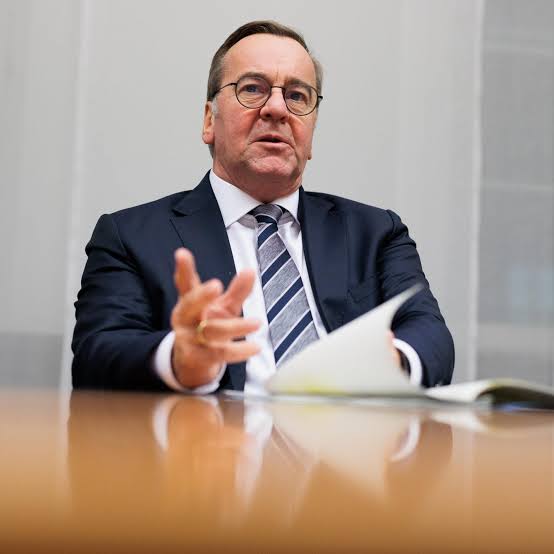
The combination is unusual for a German defence minister. Pistorius brought three things to the ministry: a lawyer’s training in administrative and constitutional law, a decade of running a state interior ministry, and personal experience of the Bundeswehr from the bottom of the ranks.
The lawyer’s habit of working from the file is visible in how he presents decisions: as constitutional and budgetary questions first, and as political ones second. The apprenticeship and conscript service give him a biography that is closer than most of his peers’ to the young people his military service law now addresses.