Boris PistoriusDefence · Politics · Europe
15 · Political positions

Where he stands, and the case against

Six positions, each set out in the same six parts: the issue, his stated position, the history, the arguments of supporters and critics, and what happened next. The aim is to inform, not to persuade.

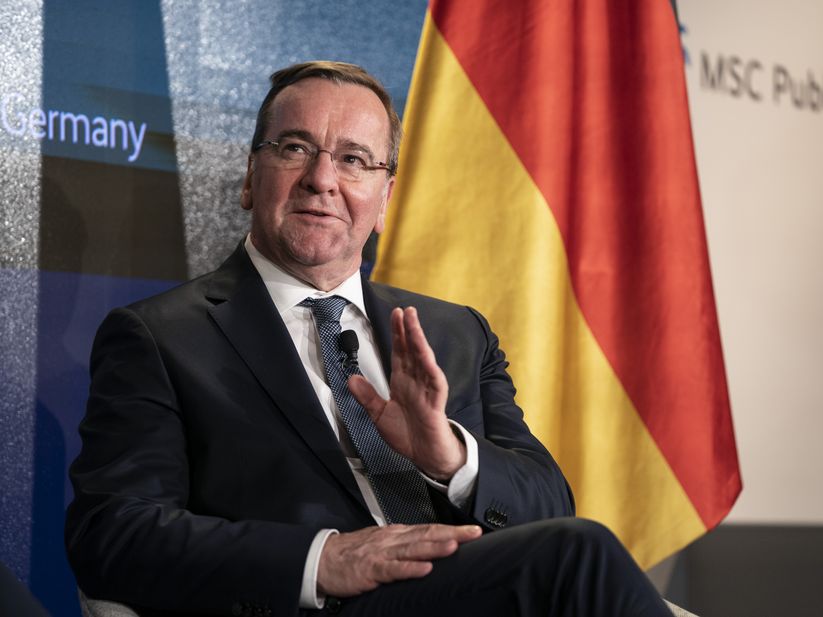
Boris Pistorius seated on stage at a Munich Security Conference event, gesturing with one hand, with a German flag behind him
Fig. 1Pistorius at a Munich Security Conference event, explaining his position.

Position 1

Russia and deterrence

Russia is the principal threat to European security, and Germany must be able to deter, and if necessary fight, a defensive war within this decade.

The issue

How Germany should judge Russian intentions after 2022, and how quickly it must prepare for a possible attack on NATO territory.

His position

In January 2024 he said experts saw a period of five to eight years in which a Russian attack on NATO could become possible. He has named 2029 as the date by which the Bundeswehr must be ready.

History

The SPD long championed engagement with Moscow, from Willy Brandt’s Ostpolitik to energy ties. Pistorius himself suggested reviewing sanctions in 2018 before revising his view in 2022.

Supporters argue

Deterrence works only if it is credible and in place before a crisis; intelligence services across NATO share similar assessments.

Critics argue

Fixed timelines can sound alarmist, feed an arms race and crowd out diplomacy. The SPD’s June 2025 manifesto called for more emphasis on arms control and talks.

Since then

The assessment underpins NATO’s 2025 spending target and the Bundeswehr’s personnel growth plan to 2035.

Position 2

Defence spending

Defence needs a permanently higher regular budget, not one-off funds, and spending should be measured by the capabilities it buys.

The issue

How much Germany should spend on defence, how to finance it under the debt brake, and whether NATO percentages are the right yardstick.

His position

He fought for more money in the 2024 budget dispute, then backed the 2025 debt-brake exemption and a path of about 0.2 percentage points of GDP a year towards the NATO target.

History

Germany spent around 1.1–1.4% of GDP on defence in most years between 2005 and 2021, well below NATO’s 2% guideline.

Supporters argue

Decades of underinvestment left gaps in ammunition, air defence and readiness that cannot be closed without sustained funding.

Critics argue

The Left and parts of the SPD say the money is needed for social policy and climate; the Greens and the AfD question efficiency and transparency.

Since then

Regular budgets of €62.4 billion (2025) and €82.7 billion (2026), with a request of €109.7 billion for 2027.

Position 3

Military service

A new military service should start voluntary, with mandatory registration and screening, and move to compulsion only if parliament decides that volunteers are not enough.

The issue

How to grow the Bundeswehr after the suspension of conscription in 2011.

His position

He presented a model inspired by Sweden in June 2024. In October 2025 he opposed a lottery system negotiated by coalition specialists.

History

Conscription existed in West Germany from 1956 and was suspended, not abolished, in 2011, following a reform launched by Defence Minister Karl-Theodor zu Guttenberg.

Supporters argue

Voluntary service attracts motivated recruits and avoids legal and capacity problems of an immediate draft.

Critics argue

The CDU/CSU wanted firmer compulsion; peace and youth groups opposed mandatory screening; some doubted the targets could be met.

Since then

Compromise on 13 November 2025, law in force since 1 January 2026, with a Bundestag decision on a needs-based draft if targets are missed.

Position 4

Ukraine and Taurus

Support Ukraine for as long as necessary, with air defence first, while avoiding steps that could make Germany a party to the war.

The issue

The scale and type of German weapons for Ukraine, especially long-range Taurus cruise missiles.

His position

He supported Chancellor Scholz’s refusal to send Taurus in 2024 while championing air defence and, later, funding long-range weapons made in Ukraine.

History

Before 2022 Germany did not send lethal weapons to conflict zones. The Zeitenwende reversed that practice.

Supporters argue

The approach maximises useful help, especially air defence, while managing escalation risks.

Critics argue

Advocates of Taurus said the refusal limited Ukraine’s ability to strike Russian logistics; opponents of arms deliveries said Germany did too much.

Since then

Germany co-chairs the contact group and budgeted €11.5 billion for Ukraine in 2026.

Position 5

Europe and the United States

Europe must carry much more of its own defence, but NATO and the partnership with the United States remain indispensable.

The issue

Whether Europe should build “strategic autonomy” or deepen reliance on the US.

His position

He rejected Vice President Vance’s 2025 criticism of European democracy as “not acceptable”, yet backed US long-range missiles in Germany and the F-35, and signed a cooperation memorandum with the Pentagon in 2026.

History

German security has rested on US guarantees since 1955, while France has long argued for European autonomy.

Supporters argue

Only the US currently provides nuclear deterrence and key enablers; Europe cannot replace them quickly.

Critics argue

Buying American systems such as F-35 and choosing Arrow 3 slows the growth of a European defence industry.

Since then

Joint European projects continue, but negotiations on major Franco-German programmes remained difficult in 2026.

Position 6

Extremism and the AfD

Right-wing extremism is a central threat to democracy, and much of the AfD belongs to it.

The issue

How democratic parties and the state should respond to the AfD and to extremists inside public institutions, including the armed forces.

His position

As interior minister he described the AfD in December 2022 as largely right-wing extremist and compared its methods with those of the National Socialists.

History

The Federal Office for the Protection of the Constitution has monitored parts of the AfD for years; the Bundeswehr has had to deal with extremist cases in its own ranks.

Supporters argue

Clear language is needed to defend the constitutional order, especially from ministers responsible for security services.

Critics argue

The AfD and some commentators said the Nazi comparison was excessive and would fuel polarisation.

Since then

As defence minister he is responsible for the Military Counter-Intelligence Service (MAD), whose tasks include detecting extremists in the armed forces.