Ukraine: a crisis timeline
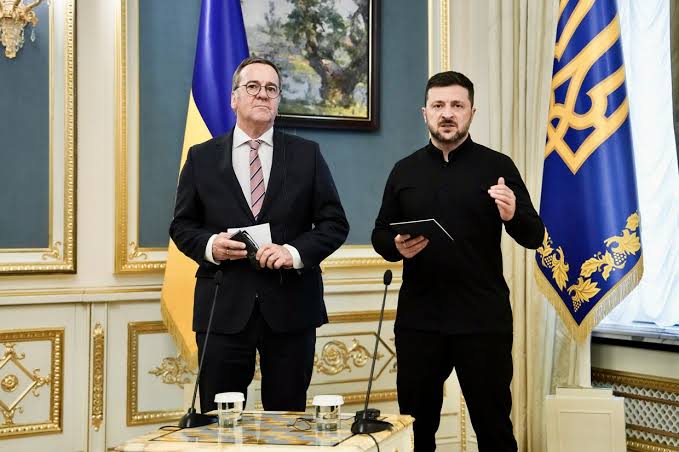
Pistorius took office eleven months into Russia’s full-scale war. Since then Germany has become Ukraine’s largest European military supporter. This timeline records the main developments with their dates.
#1
Germany is the largest European provider of military aid to Ukraine
Kiel Institute, Ukraine Support Tracker
€11.5bn
Military support for Ukraine in the 2026 federal budget, the highest annual amount so far
Federal budget 2026
14
Leopard 2A6 tanks pledged from Bundeswehr stocks on 25 January 2023
Federal Government
~50
Countries in the Ukraine Defence Contact Group he has co-chaired since February 2025
UK Ministry of Defence
Timeline of German support for Ukraine
24 & 27 February 2022
Invasion and Zeitenwende
Russia launches its full-scale invasion. Three days later Chancellor Scholz announces a turning point in German security policy. Germany begins supplying weapons, breaking with its practice of not sending lethal arms to conflict zones. Pistorius is still Interior Minister in Lower Saxony.
2022, before his appointment
From anti-tank weapons to air defence
Deliveries under Defence Minister Christine Lambrecht include Gepard anti-aircraft guns, PzH 2000 howitzers and, from October 2022, the IRIS-T SLM air defence system.
19–20 January 2023
A new minister at Ramstein
Sworn in on 19 January, Pistorius attends the Ukraine Defence Contact Group at Ramstein the next day. He orders an inventory of available Leopard tanks while the tank decision is still pending.
25 January 2023
Leopard 2
The federal government approves 14 Leopard 2A6 tanks and allows allies to re-export theirs. The first German tanks reach Ukraine in March.
7 February 2023
First visit to Kyiv as minister
Pistorius travels to Kyiv, three weeks after taking office, for talks with Ukraine’s leadership.
April 2023
Patriot arrives
A German Patriot air defence system, pledged in January, enters service in Ukraine.
13 May 2023
The largest package to date
Pistorius announces a package worth about €2.7 billion, including tanks, armoured vehicles, artillery and air defence, ahead of President Zelensky’s visit to Germany.
October 2023
A winter package
A further package worth about €1 billion focuses on air defence for the winter, when Russia targets Ukraine’s energy infrastructure.
26 February 2024
No Taurus
Chancellor Scholz publicly rules out supplying Taurus cruise missiles, citing the risk of German involvement in targeting. Pistorius supports the Chancellor’s position.
1–3 March 2024
The leaked Luftwaffe call
Russian state media publish a recording of senior Luftwaffe officers discussing Taurus scenarios. Pistorius calls it part of “an information war that Putin is waging” and orders an investigation.
13 April 2024
A third Patriot system
Germany pledges an additional Patriot system from Bundeswehr stocks as Russian missile strikes intensify, and urges allies to do the same.
12 February 2025
Germany and Britain take the chair
Pistorius and UK Defence Secretary John Healey chair the Ukraine Defence Contact Group at NATO headquarters, the first time the United States does not lead it.
11 April 2025
Record pledges
At the next meeting, partners pledge about €21 billion in military aid, a record for the group.
May 2025
Production in Ukraine
During President Zelensky’s visit to Berlin on 28 May, Germany agrees to finance the production of long-range weapons in Ukraine. Germany increasingly funds Ukrainian and joint German–Ukrainian production rather than drawing on Bundeswehr stocks.
9 September 2025
Long-range drones from Ukraine
At the contact group meeting in London, Pistorius announces a €300 million initiative: contracts with Ukrainian manufacturers for several thousand long-range drones of various types.
November 2025
€11.5 billion for 2026
The Bundestag budget committee raises military aid for 2026 by €3 billion to €11.5 billion, including replacements for Patriot systems, drones, artillery and armoured vehicles.
13 February 2026
A German–Ukrainian drone factory
On the eve of the Munich Security Conference, Pistorius accompanies President Zelensky to Quantum Frontline Industries near Munich, a joint venture of Germany’s Quantum Systems and Ukraine’s Frontline Robotics, where the first Linza 3.0 drone built in Germany is handed over.
4 October 2026
Agreements in Kyiv
During Chancellor Merz’s visit to Kyiv, the two governments sign fourteen agreements on air defence, radars, drones and energy. German officials value them at about €6.6 billion; President Zelensky put the total above €8.5 billion, counting Ukrainian orders from German industry.
B The debate
Taurus, tempo and transparency
German support for Ukraine has broad parliamentary backing but remains contested in its details. These are the main lines of argument, presented without endorsement.
For the government’s course
- Germany’s cumulative support is the largest in Europe, focused on what Ukraine most needs: air defence
- Restraint on Taurus avoided the risk of direct German involvement in targeting
- Funding production in Ukraine is faster and cheaper than shipping from Bundeswehr stocks
- Co-chairing the contact group kept the coalition of supporters together after the US stepped back
Critics’ objections
- The CDU/CSU in opposition, the Greens and the FDP repeatedly urged the Scholz government to send Taurus
- Decisions such as Leopard 2 came late, after long hesitation
- The Left, the BSW, the AfD and parts of the SPD argue for more diplomacy and fewer weapons
- The Merz government’s decision in 2025 to publish fewer details on deliveries reduced public scrutiny
C Coordination
Working through NATO and the EU
Support for Ukraine runs through several channels at once: bilateral packages from Germany’s budget; the Ukraine Defence Contact Group; NATO’s coordination of security assistance and training; the EU’s training mission for Ukrainian soldiers, in which Germany has trained thousands of Ukrainian personnel; and EU instruments such as the European Peace Facility and loans to Ukraine.
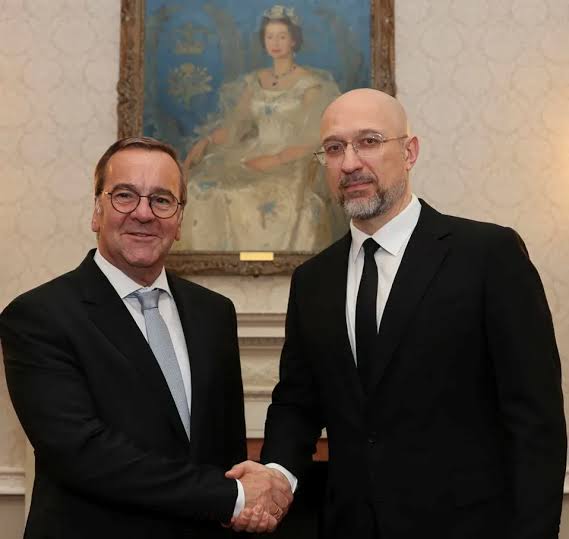
Pistorius’s counterparts in Kyiv have changed several times, from Oleksii Reznikov to Rustem Umerov and, since July 2025, Denys Shmyhal. His message has stayed the same: support for as long as it is needed, with air defence as the first priority.